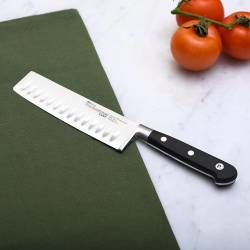
What is a nakiri knife?
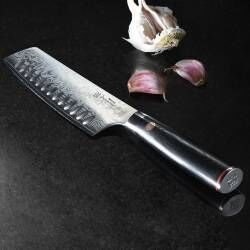
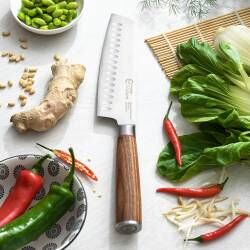
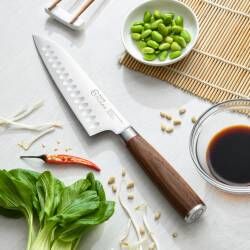
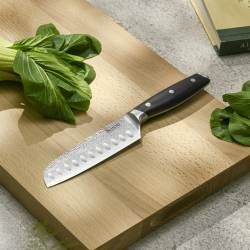
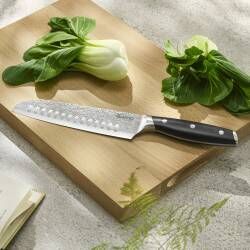
A nakiri knife is a Japanese vegetable knife. With its specialised design, it excels at slicing, cutting and chopping a variety of vegetables – from larger to smaller produce – and its large, broad blade can also be used to crush garlic cloves, nuts and more.
Although a nakiri knife has a large, broad blade, it shouldn’t be confused with a cleaver. Nakiri knives should never been used to cut through large cuts of meat, bones or cartilage. They should also never be used to prep frozen foods. Unlike cleavers which are hardy and heavy, nakiri knives are much more fragile.
What is a nakiri knife used for?
Translating to “leaf cutter” or “vegetable cutter,” nakiri knives are designed to prepare an assortment of vegetables but can also be used to chop and slice herbs and some fruits like apples, melons and tomatoes too.
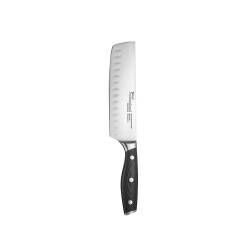
Because of its generous size, you can chop a variety of vegetables regardless of size, from aubergine to parsnips, onions, garlic and anything in between. Its blunt tip avoids piercing vegetables when prepping, meaning you can prepare more delicate produce like courgettes, while the nakiri’s broad, rectangular blade makes it fantastic at scooping up chopped produce.
Nakiri knives excel at the fine dicing, mincing, chopping and slicing of vegetables and some fruit, while also being great at crushing garlic cloves too.
How to use a nakiri knife
With the nakiri knife’s straight cutting edge and no-tip blade, you should always perform ‘push cutting’ (cutting in a straight down motion) when chopping vegetables, herbs and fruit. This is because the standard ‘rocking motion’ of Western knives can end up damaging the blade of a nakiri knife.
The shape of the nakiri knife’s blade is a deliberate design choice, allowing you to have maximum contact with the chopping board for a precise, clean cut. Whether you’re chopping onions, slicing delicate greens or mincing garlic or herbs, the flat edge and thin blade of a nakiri knife is perfect for producing uniform and/or paper-thin slices.


 Electricals
 Coffee
 Mixers and Blenders
 Kettles and Toasters
 Cooking
 Small Appliances
 Cookware & Bakeware
 Pots and Pans
 Cookware sets
 Speciality Cookware
 Baking
 Roasting
 Knives
 Knife Sets
 Single Knives
 Knife Accessories
 Tableware
 Single Items
 Dinner Sets
 Serveware
 Table Accessories
 Kids tableware
 Drinkware
 Hot Drinkware
 Cafetieres and Teapots
 Drink Accessories
 Accessories
 Kitchen Utensils
 Tools and Gadgets
 Storage
 Cleaning
 Offers
 Clearance
 Gifting
 Gift Cards